Air sealing services in Goose Creek SC - a tighter house that still breathes
Drafty rooms, a hot upstairs and a power bill that keeps climbing? We find the hidden leaks, seal them and check your fresh air.
- Licensed and fully insured.
- Free on-site estimates.
- Replies within 1 business day.
What does air sealing a Goose Creek house involve, and should it come before new insulation?
Air sealing in Goose Creek is finding and closing the gaps where air slips in and out of your house, mostly hidden in the attic floor around pipes, wiring, light fixtures and the hatch. Once those are closed, rooms stop feeling drafty, your heating and cooling stop straining, and you keep out the moisture that can warp wood and lead to mold. It usually comes right before attic insulation, and we check your fresh air once the house is tighter.
Most people call us because the room over the garage won't cool down, the floors run cold in winter or the power bill keeps going up even though the attic looks like it has plenty of insulation. Usually the insulation isn't the whole problem, because air is moving through gaps that layer is sitting right on top of, so I like to seal first and then decide whether you need more attic insulation. The price comes down to how many openings your attic has, how much old insulation we have to pull back to reach them and how easy the space is to move around in. The schedule turns on that same access and on anything that has to be fixed before we seal. My written estimate lists every area, material and prep step, so you'll see what's going in and why.
How can you tell your house has air leaks worth sealing?
Hot rooms upstairs
The bonus room over the garage or the upstairs bedrooms stay hot in summer even with the AC running hard. Usually air is pouring in through gaps in the attic floor or the walls around that room, and every month you wait, the system works harder and the power bill shows it.
Dark streaks on insulation
If you look in the attic and see gray or black patches on the insulation around light fixtures, pipes or the hatch, air has been moving through there and leaving dust behind the way a filter does. Adding more insulation on top won't stop it, so those spots keep leaking until somebody seals them.
Drafts and cold floors
You feel air at outlets on outside walls, along the baseboards or around the attic door, and the floors run cold in winter. That's outside air getting in through gaps you can't see, and the longer it goes, the harder your heat runs to keep up.
Often paired with air sealing
Basement insulation
When a basement feels damp or chilly, insulating its walls and the wood band on top of them stops outside air from drifting up into the rooms above.
Closed-cell foam insulation
When your ductwork runs through the attic, closed-cell foam seals and insulates in one pass, and that's when its higher cost is usually worth it.
How we handle air sealing services, from the attic floor down
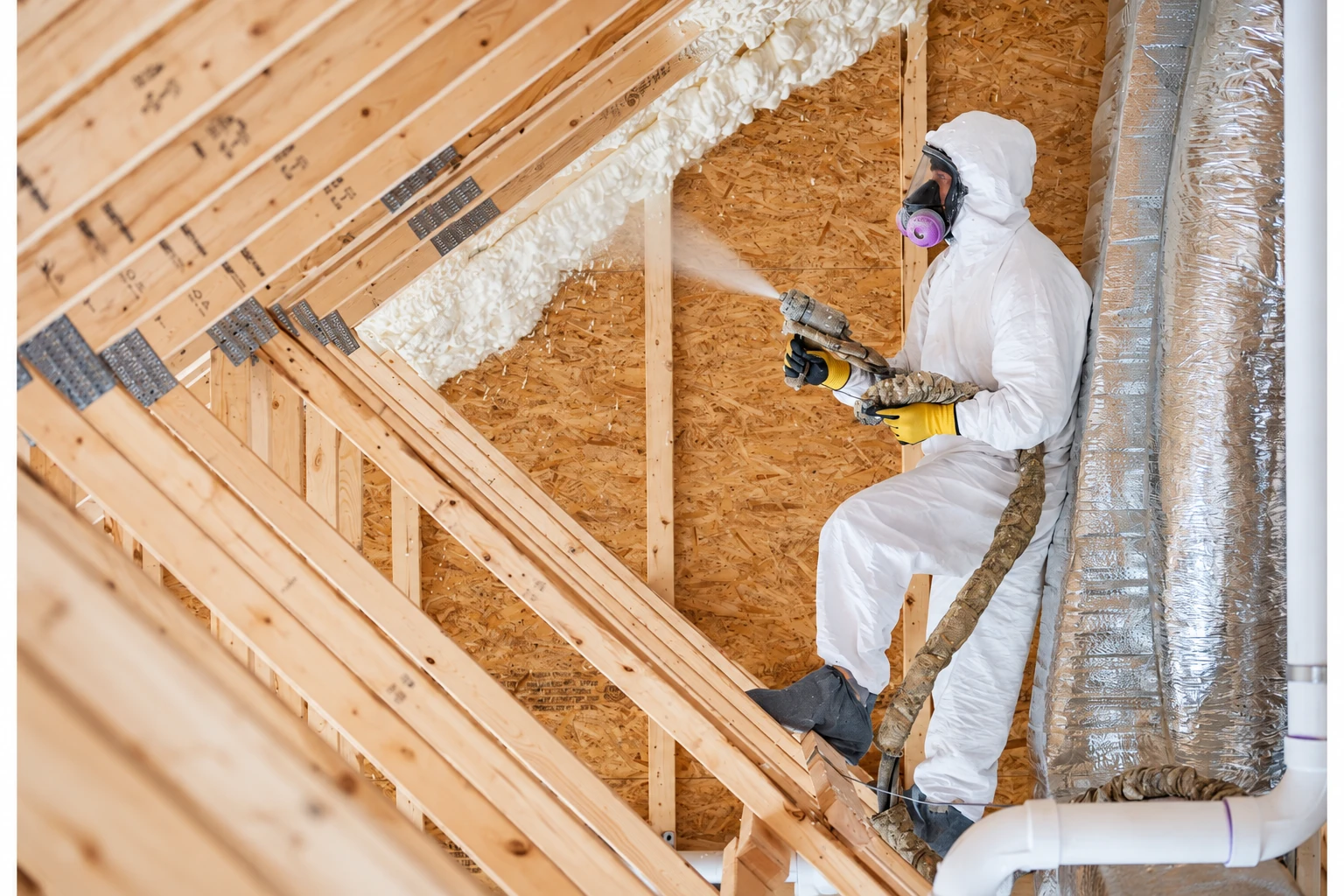
Some gaps are easy enough to seal yourself, and when that's all your house needs, I'll tell you so. We're there for the leaks you can't see, the ones buried under attic insulation around can lights, plumbing stacks, wiring holes, the tops of interior walls and the attic hatch. We start by looking over the attic for anything that has to be fixed first, then pull back the old insulation only where we need to reach a gap, close each hole with caulk, spray foam or rigid blocking depending on its size, and lay the insulation back down. We leave the soffit, ridge and gable vents open on purpose, along with any combustion air duct, the pipe that feeds air to a gas furnace or water heater, because those openings only work if air can move through them. Once the house is tighter, we look at whether it still gets enough fresh air, especially if you've got gas appliances inside.
When ducts run through the attic, closed-cell foam insulation, a dense foam that also blocks moisture, can take over the sealing and insulating in one step. If cold air is coming up from below, we carry the same work down to basement insulation on the walls and the wood band along their top.
Attic sealing on its own
This fits a house whose attic already has a good, dry layer of insulation but still feels drafty below. We pull that layer back only where we need to reach a gap and put it back when the sealing's done.
Sealing plus a blown-in top-up
This fits most attics we see, where the old layer is thin or packed down. We seal first, then add blown-in insulation, loose fill blown through a hose, evenly out to the edges so the eaves get covered as well as the middle without burying the vents.
Foam that seals as it insulates
This fits a house with ductwork living in the attic, where it makes sense to bring that space inside the insulated part of the house. Foam costs more than sealing and loose fill, so I only recommend it when the ducts or the space call for it.
Get a written air sealing estimate for your house
We'll reply within one business day to set a time for me to come out for a free on-site estimate, no obligation. A call to (843) 278-0275 works too.
Call (843) 278-0275Why Goose Creek homeowners call Anchor Goose Creek Spray Foam Insulation for air sealing
I measure and write every estimate
I come out myself to look in the attic, measure and write the estimate, and I check the finished work with you at the end. I spent years on the sales side before I learned to install, so I'd rather quote what your house needs than what sounds good.
Working from Goose Creek since 2020
I started this business in Goose Creek in 2020 after learning the trade on install crews. Most of our calls come from homeowners here and in North Charleston, Summerville, Charleston and the other cities around it, and if yours isn't listed, call and ask.
Licensed and fully insured
We're licensed and fully insured, which counts when a crew is working over your ceilings. South Carolina's licensing agency calls a contractor hired for specialized trade work on a job over $500 a Residential Specialty Contractor, so it's fair to ask anyone you're comparing whether that covers your air sealing job.
Fix it, seal it, then insulate
A leaking roof, a bath fan blowing into the attic or soaked old insulation gets dealt with before we seal, and sealing happens before any new insulation goes in. That order keeps your money on work that lasts instead of covering up a problem with fresh material.
If your house is drafty and you're not sure where the air's getting in, get in touch and I'll come find out.
What happens after you call us about air sealing in Goose Creek?
Call or send the form
Tell us what's bothering you, whether it's a hot bonus room, cold floors or a high bill. We get back to you and set a time for me to come out.
I look, measure and write it up
I go through the attic, plus the crawl space or basement if the trouble's coming from below, and note anything that should be fixed before we seal. Your written estimate lists every area, the material for each spot and every prep step, so you can see what you're paying for and what can wait.
Our crew seals to the estimate
Our crew lead and installers do the work as written, pulling back insulation only where they need to reach a leak. They lay it back evenly when they're done so the coverage isn't thin at the edges.
We walk the finished job
I go through the finished work with you and show you what was sealed. If fresh air came up at the estimate, we go over that together too.
Common questions
Can I seal air leaks in my house myself?
Yes, you can seal the obvious ones yourself. Gaps around door frames and where pipes, vents and wires pass through outside walls are fine to caulk on your own, but the small leaks buried under attic insulation usually won't turn up without testing. Those hidden attic leaks are the ones worth calling us about.
How do I find hidden air leaks in my house?
The surest way is a home energy assessment, where a certified assessor runs a blower door test, a big fan that pulls air out so the leaks show themselves, and uses an infrared camera to spot cold and warm areas. The same visit can judge how well the house is ventilated. If you're comparing assessors, ask whether they hold the Building Performance Institute Building Analyst or the RESNET Home Energy Rating System Rater certification, the two nationally recognized ones.
Will air sealing make my house stuffy or unsafe?
Not when the house is checked for fresh air after it's sealed. Without enough ventilation, moisture and harmful gases can build up, and a gas appliance that's short on air can give off carbon monoxide, so a tighter house sometimes needs a fan system added to bring fresh air in on purpose. That's why checking ventilation is part of how we plan the sealing.
Who do I call about permits for air sealing in Goose Creek?
The city's permits office takes permit questions at (843) 797-6220, ext. 1100 or 1122. Before we schedule, we check with the office that handles permits for your address, since that can differ by where you live, and if one's needed, we take care of it and let you know where it stands.
How much does air sealing cost in Goose Creek?
We price air sealing after I've been in your attic, because the cost turns on what's up there. Lots of openings, old insulation that has to come out first, a tight attic that's slow to work in or foam instead of caulk all push it up, while an open attic with a few clear gaps keeps it down. My written estimate gives you the figure for your house, with each area and material listed.
What is the best way to air seal an attic before adding insulation?
Seal every hole through the attic floor first, using sealant, spray foam or rigid blocking as the opening calls for, which is what guidance for existing vented attics recommends. Once new insulation goes down, those gaps are buried and much harder to reach. If you're planning more insulation, plan the sealing as the first step of that job.
Book your air sealing visit in Goose Creek
Before I come out, jot down your gas and other fuel-burning appliances, any roof leaks and whether a bath fan vents into the attic, because those decide what gets fixed first and how we handle fresh air.