
Closed-cell foam insulation in Goose Creek SC - a sealed layer against heat and moisture
Hot upstairs, a drafty room over the garage or a power bill that keeps climbing? We seal and insulate in one dense layer.
- Licensed and fully insured.
- Free on-site estimates.
- Replies within 1 business day.
Is closed-cell foam the right insulation for my walls or attic in Goose Creek?
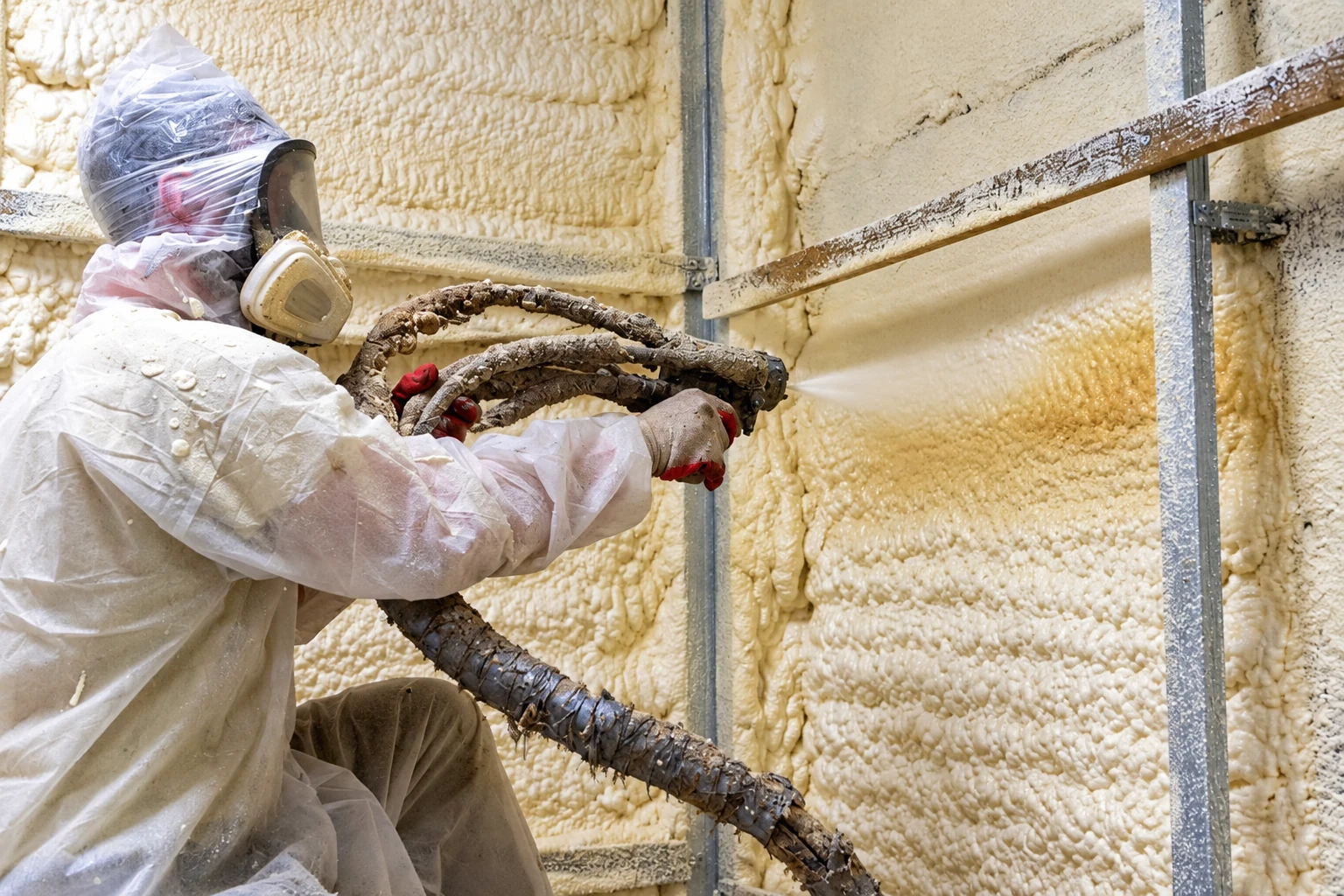
Closed-cell foam insulation is a dense, rigid spray foam that slows heat, seals air leaks and holds back moisture in one layer. In Goose Creek we spray it in walls, under roof decks and on metal buildings, usually after fixing leaks and clearing out damaged insulation first.
Most people call because a room upstairs stays hot, the ducts bake in the attic or a wall never feels dry, and they've heard foam fixes everything, so I look at what's actually there before I quote anything. Your price turns on how many square feet get foam, how thick it goes, how easy the space is to reach and whether old insulation has to come out first through insulation removal. The schedule turns on getting problems fixed first and finding a day your household can be out of the house, and my written estimate lists every area, material and prep step so you can see your own number. Before we schedule, we check with the office that handles permits for your address, which in Goose Creek is the city's Permits Division, and if a permit is needed, we take care of it and tell you where it stands.
How do you know your house could use closed-cell foam?
Hot room over the garage
The room over the garage runs hot all summer and the floor feels cold in winter, usually because the insulation under it is thin or gapped and garage air leaks straight through. Left alone, the AC runs longer for a room you still don't want to use.
Ductwork in a hot attic
When your AC ducts and air handler sit up in the attic, the cooled air travels through the hottest part of the house before it reaches you. Every summer you wait, you're paying to cool air that warms up on the way.
Damp, musty or dripping spots
A musty wall, sweating on a metal roof or water stains on framing usually mean humid air is hitting a cool surface and turning to water. Wait too long and that water soaks into the wood and insulation, so the repair grows before any new insulation goes in.
Other foam work worth comparing
Open-cell foam insulation
Open-cell foam is lighter and softer, costs less per inch and quiets sound well, so it often makes sense for interior walls and spots that won't see moisture.
Commercial insulation
Shops, warehouses and metal buildings around Goose Creek often need foam on steel roofs and walls to stop dripping condensation and keep the space workable year-round.
How we install closed-cell foam insulation
We fix what's wrong first, pulling out insulation that's wet or full of droppings and getting leaks repaired, because foam sprayed over a problem only hides it. Next our crew seals the gaps around pipes, wiring, can lights and the attic hatch, then sprays the foam to the thickness on the estimate, carried evenly out to the edges instead of piled in the middle, and covers it with a fire-barrier coating or drywall where the foam or the code calls for one. We use closed-cell where you want one layer that slows heat and holds back moisture, and when we seal an attic with it, we plan how that attic will get rid of moisture before we spray. If anyone in the house has breathing or skin sensitivities, tell us early so we can talk about other options.
Foam costs more than loose fill, and if your ductwork isn't in the attic, sealing the gaps and topping up blown-in insulation, loose fill blown in through a hose, usually wins, so that's how I'll quote it. When moisture isn't the worry, open-cell foam insulation is the lighter, cheaper foam, and our commercial insulation work puts closed-cell on the steel walls and roofs of shops and metal buildings.
Full-thickness wall foam
This suits new walls, additions and open stud bays, because one full layer of closed-cell handles air leaks, heat and moisture at the outer side of the wall. It's the most foam per square foot, so it's also the higher price.
Hybrid foam and fill
A thinner coat of closed-cell seals the wall and controls moisture, and a less costly insulation fills the rest of the cavity. It suits owners who want the foam's seal without paying for full depth.
Sealed attic at the roofline
Foam under the roof deck makes sense when your ductwork or air handler lives in the attic, because it brings them into the cooled part of the house. We plan the attic's moisture removal as part of the same job.
Get a written estimate for closed-cell foam
We reply within one business day and set a time for me to come out, measure and write your free estimate, with no obligation. Calling (843) 278-0275 works too.
Call (843) 278-0275Why Goose Creek homeowners call Anchor Goose Creek Spray Foam Insulation for closed-cell foam
I measure and write every estimate
I started out writing up insulation jobs on the sales side, then learned the trade on install crews, and now I'm the one who comes out, measures and writes your estimate. The person quoting your foam knows what it takes to spray it, and I'll tell you when your house needs something else.
In business since 2020
We've been doing this work since 2020, with a crew lead and installers who spray to the estimate I wrote. At the end I check the job with you, so the person who quoted it is the one signing off on it.
Licensed and insured for insulation
We're licensed and fully insured. South Carolina treats insulation for heat and sound as its own specialty trade, separate from foam roofing on a building's outside, and a contractor hired for that kind of work on a job over $500 counts as a residential specialty contractor.
Working to Goose Creek's building codes
The City of Goose Creek enforces the South Carolina Residential Code and the state's energy code on one- and two-family homes, and those are the rules insulation work here is held to. Most of our calls come from Goose Creek and the cities around it, so these are the codes we work to most.
Problems get fixed and gaps sealed before any foam goes on, so tell us what's going on in your attic or walls and I'll come see it.
What happens when you call about closed-cell foam in Goose Creek?
Call or send the form
We get back to you and set a time for me to come out. Tell us what you're noticing, like a hot room or ducts in the attic, and when someone can be home.
I look, measure and write it up
I look at the attic, walls or building, measure each area and note anything that should be fixed before foam goes on. Your written estimate shows each area, the foam and its thickness, the prep and any coating, so you can see exactly where the money goes.
Our crew does the work
Our crew lead and installers work to that estimate on a day you've planned to be out of the house, as the questions below explain. They fix and seal first, then spray.
We walk the finished job
I walk through the finished job with you, showing where the foam went and how thick it is. That way you know what's in your walls and attic before any future work there.
Common questions
How much does closed-cell spray foam insulation cost in the Charleston area?
Closed-cell spray foam insulation in the Charleston area usually costs about $1 to $1.60 per board foot, which is one square foot of foam an inch thick. Thickness counts as much as area, so a thicker layer over the same wall or roof costs more in step with it. Your written estimate shows the square footage, thickness and prep for your house.
How long does it take before we can go back in the house after spray foam?
Safety guidance for homeowners says everyone should be out of the house while the foam goes on and for at least 24 hours after, so plan somewhere to stay for that whole stretch, kids and pets included. That wait is the re-entry time, the point when it's fine to come back in. We set the install day with you ahead of time and walk you through our safety steps for the job.
What does an attic sealed with spray foam need?
A sealed, unvented attic needs a way to remove moisture, so that plan belongs in the same project as the foam, not after it. National building guidance also finds sealed attics hold up better in hurricanes than vented ones, mostly because the soffit, the underside of the roof edge, is built sturdier.
What is the best way to insulate walls in a hot, humid climate?
National energy guidance for hot-humid climates calls closed-cell foam at the outer side of the wall the ideal setup, at full thickness or paired with another insulation, because it air seals and slows moisture vapor in one layer. The foam is rigid, won't soak up water and rates about R-6 per inch on the scale that measures how well insulation slows heat. When you compare wall options, weigh air sealing and moisture control, not heat alone.
Is spray foam insulation safe for someone with asthma or allergies?
Safety guidance says anyone with a history of asthma, respiratory allergies, skin conditions or a past sensitivity to isocyanates, a chemical used in spray foam, should read the product information carefully and can choose a different insulation instead. We can price another insulation alongside the foam so you can decide.
How do I handle repairs later in a wall or attic with spray foam?
Tell the electrician, plumber or anyone else working there that the foam is in place, and ask them to keep from heating or grinding it, because that can give off toxic fumes. It's a simple heads-up, the same way you'd point out where a water line runs.
Get your walls or attic measured for foam
Call Anchor Goose Creek Spray Foam Insulation at (843) 278-0275 or send the form with the area you want sealed and how many inches of insulation are up there now, and I'll come out knowing what to look for.