Attic air sealing in Goose Creek SC - fewer drafts and an attic ready for insulation
Hot upstairs rooms and a power bill that climbs each summer? We seal the gaps in your ceiling so your insulation can do its job.
- Licensed and fully insured.
- Free on-site estimates.
- Replies within 1 business day.
Do you need attic air sealing before new insulation goes in?
Attic air sealing closes the holes through your ceiling around wiring, light fixtures, flue pipes and duct chases, so attic heat and damp stay out of your rooms and the air you pay to cool stays in. In Goose Creek, SC, it usually comes right before new attic insulation, while the gaps are still easy to reach.
At Anchor Goose Creek Spray Foam Insulation, we're based in Goose Creek and work in North Charleston, Summerville, Charleston and the cities around them, and most of these calls start with a homeowner who's planning new insulation and wants it done in the right order. The price moves with how many gaps your ceiling has, how hard they are to reach under the old insulation and how easy your attic is to get into, and the schedule turns on whether anything has to be fixed first, like a roof leak. After I measure, your written estimate lists every area, material and prep step, so you see your own figure before you decide anything.
How can you tell your attic is leaking air into the house?
Hot rooms upstairs
The upstairs bedrooms or the room over the garage stay warm long after the AC kicks on. That usually means attic air is leaking down through gaps in the ceiling, and every summer you wait, the system runs longer to keep up.
Dark streaks in the insulation
Gray or black lines on old insulation around light fixtures, wire holes or the hatch are dust the insulation filtered out of moving air. They mark a leak, and piling more insulation on top won't stop the air coming through.
A damp or musty attic
Water spots on the framing or a musty smell up there can come from a roof leak or from damp house air rising through the ceiling. The longer it goes on, the more moisture the wood and insulation soak up, so it's worth finding the source before anything gets covered.
Often done alongside attic air sealing
Retrofit insulation
Older houses often have a few inches of settled insulation, and retrofit work adds to what's there instead of starting over once the sealing's done.
Spray foam insulation
If you'd rather seal and insulate at the roofline than on the attic floor, foam does both at once and keeps attic ductwork out of the worst heat.
How we handle attic air sealing
I start by checking that the attic is ready to seal, and anything that has to be fixed first goes on the estimate ahead of the sealing, because closing up an attic over a problem just hides it. Then our crew works across the attic floor, moving old insulation aside where it covers a gap, sealing the small joints and holes around wires, pipes and fixtures, covering the big openings over chases and dropped soffits with solid material and putting metal around hot flues, since foam doesn't belong against them. Soffit, ridge and gable vents and any combustion air ducts stay open on purpose because the attic needs them to breathe, and new insulation goes in only after the sealing is done.
What goes on top of the sealing depends on what's already up there. If your attic has insulation that's thin, settled or deep in the middle and bare at the edges, retrofit insulation evens it out after the gaps are closed. When the ductwork and air handler sit in the attic, spray foam insulation under the roof seals and insulates in one pass. Foam costs more, so for most attics I'd rather seal the gaps and add loose fill, unless the ducts live up there. One cost guide's advice for hot, humid climates is to seal the attic against moisture and heat, and it calls duct sealing critical because ducts so often sit in hot attics.
Seal and top up with loose fill
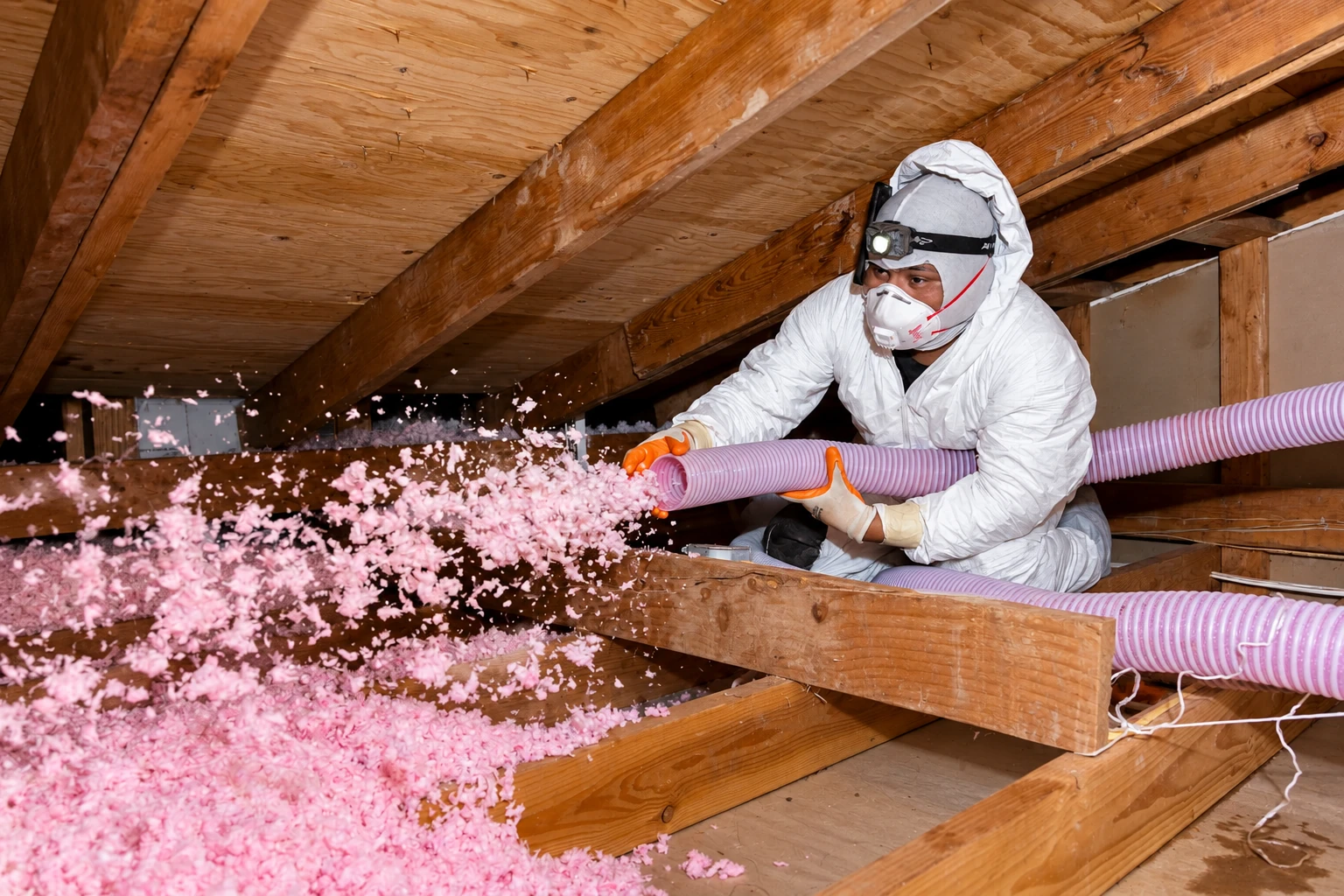
This suits most attics where the ducts don't run through, because sealing the gaps and adding blown-in insulation, loose fill blown through a hose, costs less than foam. We keep the fill pulled back from the eave vents so the attic still breathes.
Foam at the roofline
This suits houses with the air handler and ductwork in the attic, since foam on the underside of the roof seals and insulates together and brings that equipment inside the sealed space. It costs more, so I only quote it where the ducts make it worth it.
Get a written estimate for sealing your attic
We reply within one business day to set a time for me to come out, and the on-site estimate is free with no obligation. Calling (843) 278-0275 works too.
Call (843) 278-0275Why Goose Creek homeowners call us to seal their attics
I write the estimate myself
I come out to look at your attic, measure and write the estimate, and I check the finished work with you once our crew lead and installers are done. You deal with the same person from the first look to the last walk-through, so nothing gets lost between the quote and the job.
In business since 2020
I wrote up insulation jobs on the sales side and learned the trade on install crews before starting this business in 2020. That's why I'll tell you plainly when something should wait or isn't needed instead of quoting what sounds good.
Licensed and insured in South Carolina
In South Carolina, a contractor you hire for skilled trade work on a job over $500 counts as a residential specialty contractor, and the state's registration for that work includes insulation installers. We're licensed and fully insured, and you're welcome to ask about it before we start.
On this job the order decides how well it works, so the first step is a look at what's in your attic. Tell us about your house and I'll set a time to come out.
What happens after you call about attic air sealing in Goose Creek?
Call or send the form
Call (843) 278-0275 or send the form, and we'll set a time for me to come out. We take calls Monday through Friday from 6 AM to 10 PM and weekends from 8 AM to 10 PM.
I look, measure and write it up
I go up in the attic, measure and note anything that should be fixed before sealing. Your written estimate shows what's going in, where it goes and why, so you can see where the money goes before you decide.
Our crew seals the attic
Our crew lead and installers do the work to that estimate, closing the gaps before any insulation goes in. They'll need a clear path to your hatch or pull-down stairs, so clearing that closet or garage corner ahead of time helps.
I walk the finished job with you
When the crew is done, I go through the attic with you and show you what was sealed and which vents were left open on purpose. Ask anything you want then, while it's all in front of us.
Common questions
How much does attic air sealing cost in Goose Creek?
Across the US, air sealing with caulk, spray foam and weatherstripping usually costs about $500 to $1,500 per job. That's a national range for air sealing in general, not our price for a Goose Creek attic. I'll measure yours and put your own figure in writing.
Should air sealing come before new insulation?
Yes, finish the sealing before new insulation goes in, because that's how you get the most energy savings out of both. If you're planning new attic insulation, schedule the sealing ahead of it, and we can line up both on the same estimate.
What gets fixed before my attic is sealed?
A roof leak, active knob-and-tube wiring, the old wiring strung on porcelain knobs, vermiculite insulation or bathroom fans that vent into the attic should be handled before sealing starts. Combustion safety comes first too, so a house with an unvented kerosene heater or gas fireplace needs that work done ahead of the sealing. I check for these when I look at your attic, and whichever applies sets when sealing can begin.
Who handles permitting questions in Goose Creek?
The city's Permits Division handles permitting questions at (843) 797-6220, ext. 1100 or 1122. Before we schedule, we check with the office that handles permits for your address, and if a permit is needed, we take care of it and let you know where it stands.
What is the best way to air seal recessed lights in the attic?
Start by finding out whether your can lights are ICAT-rated, the rating for lights built to sit in insulation and hold back air, because lights without it get a cover built over them. I check the lights when I'm up there and put whatever they need on your estimate.
How do I seal the attic hatch or pull-down stairs?
Weatherstrip the edges where the hatch or stairs meet the frame, and fasten rigid foam board to the back of the door. Treat it the way you'd treat a door to the outside, and if we're sealing your attic, ask us to include the hatch.
Tell us about your attic before you insulate
Call (843) 278-0275 or send the form with a word about your attic access, any gas or kerosene heaters, past roof leaks and your insulation plans, so I come out knowing what to look for.