
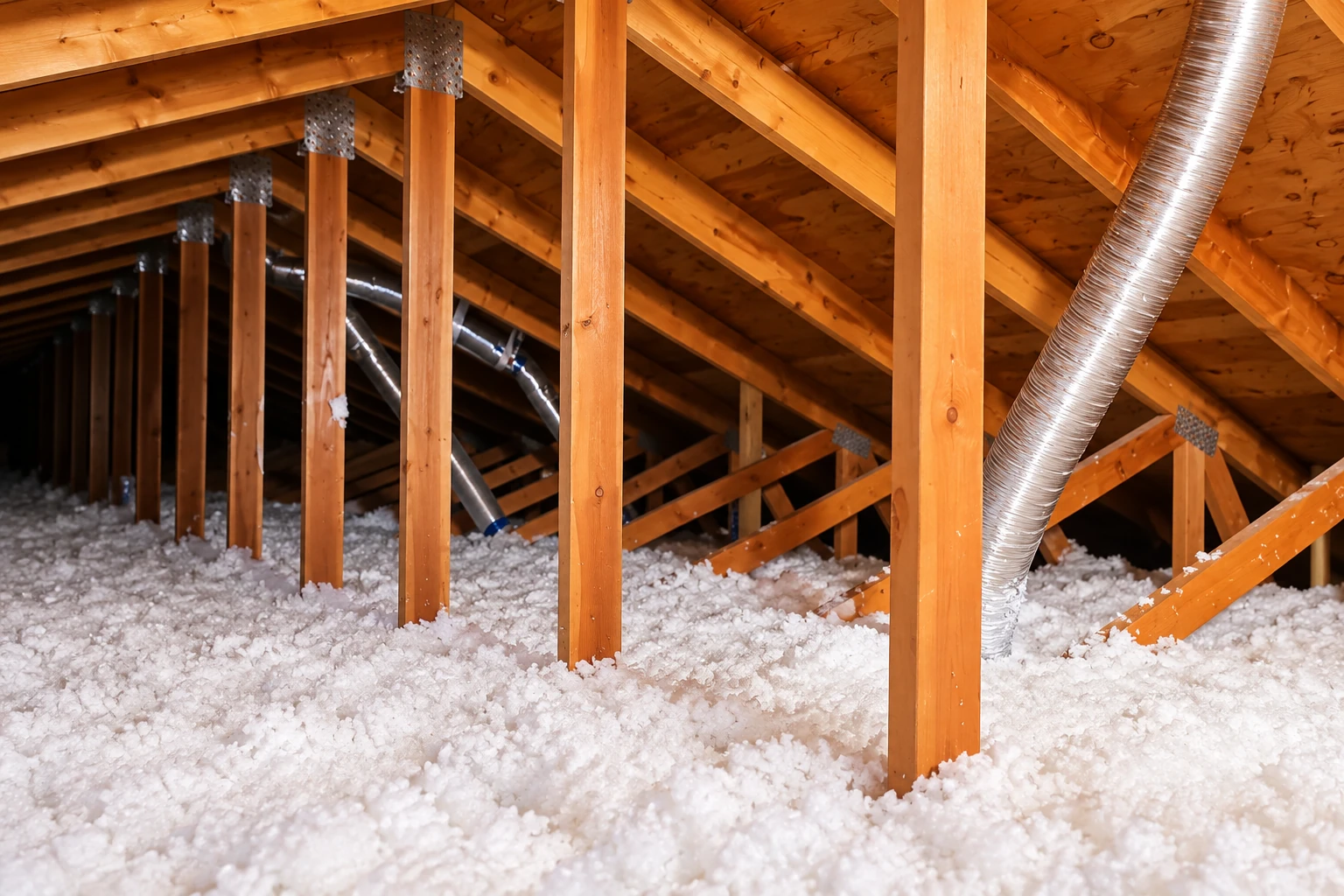
Blown-in insulation in Goose Creek SC - an attic covered evenly from edge to edge
Hot upstairs rooms and a climbing power bill usually start in a thin attic. We seal the gaps, then cover the whole ceiling evenly.
- Licensed and fully insured.
- Free on-site estimates.
- Replies within 1 business day.
Should you add blown-in insulation and seal the attic first?
Blown-in insulation is loose fiberglass, rock wool or cellulose that we blow through a hose across your attic floor, and in Goose Creek it's how most homes get the whole ceiling covered evenly so heat has a harder time getting into the rooms below. On most attics it comes with sealing the gaps in the ceiling first and keeping the fill clear of flues, fans and the eaves.
Most calls start with a hot room over the garage or a power bill that jumped, and when I go up the hatch I usually find a few inches of old insulation, thin at the edges, with open gaps around wires and lights. The price moves with the size of the attic, how much is already up there, how much attic air sealing and blocking has to happen first and how easy the space is to move around in. The schedule turns on those same things plus whether your address needs a permit, and the written estimate I leave you lists each area, material and prep step so you can see where your money goes.
How can you tell your attic needs more insulation?
Upstairs runs hot
The top floor or the room over the garage is warm by mid-afternoon while downstairs feels fine, and that usually means the attic layer is thin or patchy. Every summer you wait, the AC runs longer to cool rooms that keep taking heat from above.
You can see the joists
Shine a light in from the hatch, and if the tops of the ceiling joists are showing, the insulation has settled or was never deep enough. You're paying to cool air that the ceiling can't hold onto.
Deep in the middle, bare at the edges
Insulation piled up near the hatch and thin along the outside walls is backward, because the edges over the exterior walls need full coverage too. Left alone, it shows up as warm corners in summer and cold floors upstairs in winter.
Work that often goes with it
Home insulation
If the attic is only part of the problem, a look at the walls, floors and crawl space shows where else your house is losing cool air.
Insulation removal
When the old layer up there is wet, matted or fouled by animals, pulling it out first keeps new insulation from sitting on the same problem.
How we install blown-in insulation
Most of this job is getting even coverage across the whole ceiling, so the order matters. Before anything else I check what kind of recessed lights you have, because that decides what can be covered. Then our crew seals the holes through the ceiling around wiring, light fixtures, flue pipes, duct chases and registers, since insulation laid over an open gap just fights the draft coming through it. We set metal flashing around flues, chimneys and exhaust fans so the fill stays clear of them, put baffles at the eaves so insulation can't fall in and the attic keeps breathing, and blow the fill out to the edges before we bring up the middle. We clean the path from the hatch when we're done.
Blown-in works best as part of a plan for the house, so if walls, floors or the crawl space are part of why it's uncomfortable, we look at those under home insulation. If the old layer is wet, matted or full of droppings, I'll tell you, and insulation removal comes before anything new goes in. Foam costs more and seals air while it insulates, but I only point you to spray foam insulation when your ductwork runs through the attic, because sealing the gaps and topping up with loose fill usually does the job for less.
Fiberglass loose fill
This suits most attics we top up, because it's light and spreads evenly over what's already there. It holds its height well, so the depth we blow is close to the depth you keep.
Cellulose loose fill
This suits attics crowded with wiring, braces and low corners, because the denser fill works into the spaces around them. It's recycled paper treated to resist fire, and it settles a bit over time, so we blow it a little deeper to allow for that.
Get a written estimate for blown-in attic insulation
Send the form and we'll get back to you within one business day to set a time for me to come measure. The estimate is free with no obligation, and calling (843) 278-0275 works too.
Call (843) 278-0275Why Goose Creek homeowners call Anchor Goose Creek Spray Foam Insulation for blown-in insulation
I measure and write every estimate
I come out myself to measure the attic and write the estimate, with every area, material and prep step listed. I started on the sales side, learned the trade on install crews and opened this business in 2020, so I'd rather quote what your house needs than what sounds good.
Licensed and fully insured, easy to check
We're licensed and fully insured. South Carolina lists insulation as a residential specialty trade, and a contractor you hire for that kind of work over $500 falls under it, so you can check anyone you're considering with the state licensing board.
Based in Goose Creek, working nearby
We're based in Goose Creek and work in North Charleston, Summerville, Charleston and other cities around it, so the attics we open are mostly the same ranches and two-stories you live in. If your city isn't listed, call and ask.
On a blown-in job, the order is what you're paying for, with gaps sealed and heat sources blocked before the fill goes down. Request your estimate or call (843) 278-0275 and I'll come take a look.
What happens after you call about blown-in insulation in Goose Creek?
Call or send the form
Tell us a little about the house and where the attic hatch is. We get back to you and set a time for me to come out.
I measure and write it up
I go up in the attic, measure, note how many inches are already there and anything that should be fixed first. You get a written estimate listing every area, material and prep step, so the price is settled before anyone starts.
Our crew seals, then blows
Our crew lead and installers do the job to that estimate, sealing and blocking before any fill goes in. We protect the path to the hatch and clean up when we're done.
I walk the job with you
When the crew finishes, I go through the attic with you against the estimate so you can see the coverage reaches the edges and the eaves are open. Your satisfaction, guaranteed.
Common questions
How much does blown-in insulation cost in Goose Creek?
Attic insulation in the Charleston area usually costs about $1,400 to $4,500 per job. That's a typical range for the area, not our price, and where yours lands depends on the attic's size, how much is already up there and how much sealing comes first. The written estimate from my visit sets your actual number.
Is blown-in insulation better than batts for an attic?
For most attics, yes, because blowing loose fill usually costs less than laying batts and gives better coverage. Loose fill flows around wires, braces and odd corners where batts leave gaps, though the cost of either still varies from house to house.
How much can blown-in insulation save on my power bill?
You save the most when new insulation goes in together with sealing the air leaks, because the savings people quote count both. A big share of the heat a house picks up in summer comes through the roof and attic, so a sealed ceiling with even coverage is where most homes feel the difference.
Do I need a permit for blown-in insulation in Goose Creek?
Ask the City of Goose Creek, which takes permit questions at 843-797-6220, ext. 1508. The city holds work to the residential building code with South Carolina's changes and the state energy standard. Before we schedule, we check with the office that handles permits for your address, and if one is needed, we take care of it and tell you where it stands.
How do I know if my recessed lights can be covered with insulation?
Only recessed lights rated IC, a mark that means the fixture is airtight and made to be covered, should go under insulation. The rating is usually printed on a label inside the housing, and I check each one on the estimate visit so we know which need attention before the crew starts.
How long does blown-in attic insulation take, and do we have to leave?
Blowing the fill goes quickly, so the time mostly turns on your attic's size, how easy it is to move around up there and how many gaps need sealing first, and your estimate lays that out. You usually don't have to leave, because loose fill isn't foam and doesn't need time to cure, though we'll ask you to keep kids and pets away from the hatch while we work.
Book a look at your attic insulation
Call (843) 278-0275 or use the form, and tell us where your attic hatch is and whether there are recessed lights in the top-floor ceiling, so I can plan the visit before I get there.