Retrofit insulation in Goose Creek SC - a house that holds the cool it pays for
Hot upstairs rooms and a summer power bill that keeps climbing? We add insulation where your house is short, after sealing the gaps.
- Licensed and fully insured.
- Free on-site estimates.
- Replies within 1 business day.
Does your older house need retrofit insulation in the attic or walls?
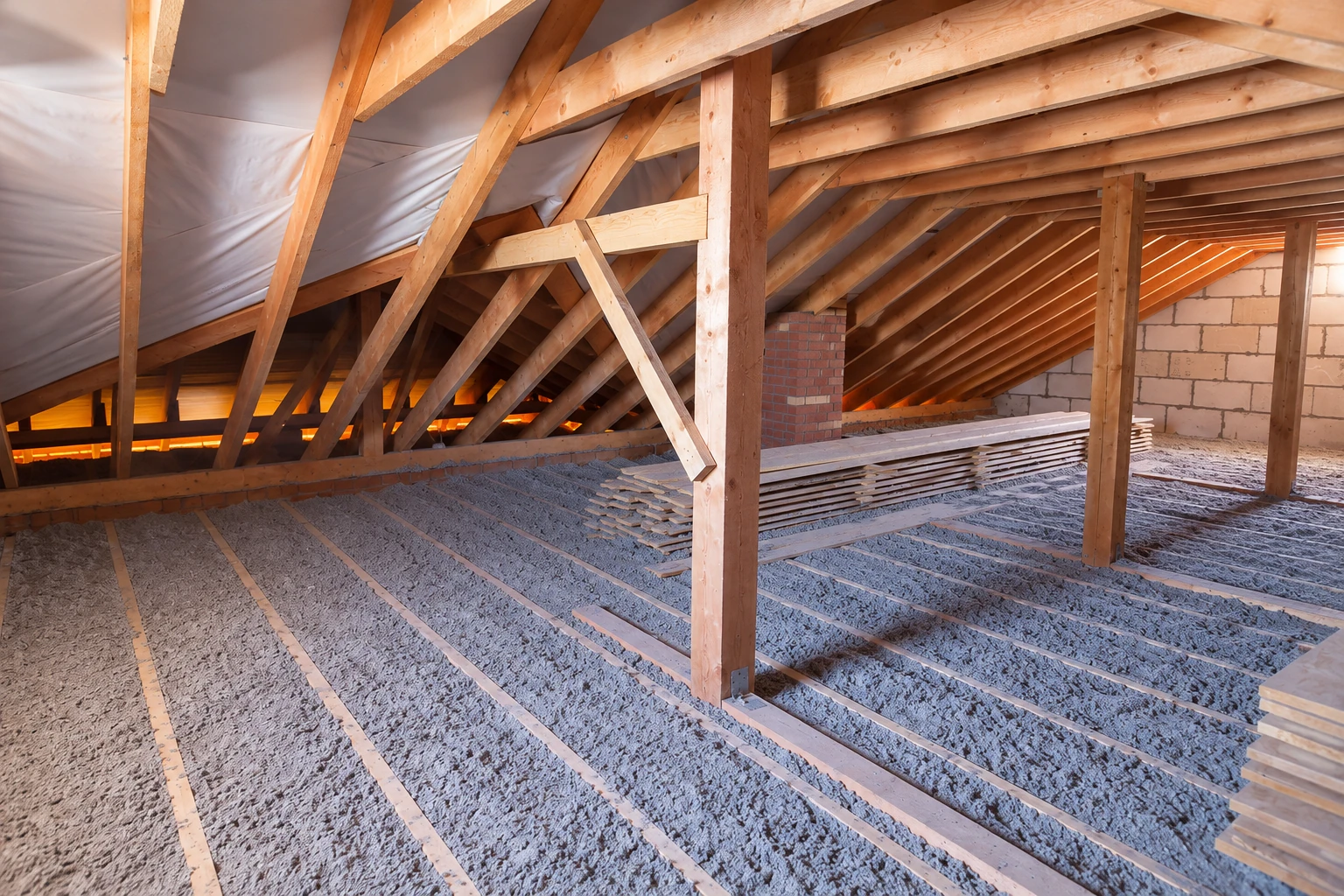
Retrofit insulation adds insulation to a house that's already built, usually blown fiberglass or cellulose on the attic floor, or loose fill blown through a hose into closed wall cavities, so your Goose Creek home holds its heating and cooling better. On most jobs we first close the gaps through the attic floor, the step we call air sealing, and then the new insulation goes in.
Most calls start with a hot upstairs, a room over the garage that never cools off, or a power bill that won't come down, and the fix is usually in the attic or the outside walls rather than the AC. The price moves with how much area we're covering, how many inches are already up there, how many gaps need sealing and whether walls are part of the job. The schedule turns on how easy the attic is to get into, any old material that has to be dealt with first and whether older wiring needs a plan. Your written estimate puts your own figure on all of it.
How can you tell your house is short on insulation?
Upstairs won't cool down
The AC runs all afternoon and the bedrooms still feel warm by evening. That usually means the attic floor is thin or patchy, so attic heat pushes down through the ceiling, and every summer you wait is another summer of paying to cool air that doesn't stay put.
Drafts at lights and outlets
You feel air moving around can lights, the attic hatch or outlets on outside walls. Those are open gaps, and insulation laid over them ends up fighting a draft, so anything you add later does less until they're sealed.
Damp spots around attic ducts
In our humid summers, cold air-conditioning ducts in the attic can drip condensation, which the trade calls duct sweating. You'll see stained or damp insulation under the duct runs, and left alone that water puts the attic floor at risk of mold and rot.
Work that often goes with it
Spray foam insulation
Bonus rooms, the room over the garage and sloped ceilings where loose fill won't stay put often do better with foam sprayed right onto the framing.
Attic insulation
When your attic needs a full new layer rather than a top-up over what's there, this is the job that covers the whole floor, eaves to eaves.
How we handle retrofit insulation
I start by checking what's already in the attic or walls, because the method has to match the house. If the old insulation is soaked or full of droppings, that gets dealt with first, since covering it just keeps the problem. Next we seal the openings through the attic floor around can lights, pipes and the hatch, because sealing saves energy, lowers the fuel bill and helps keep moisture out of the attic. Then we blow insulation across the attic floor, keeping the eave vents clear so the attic still breathes and carrying full depth out to the edges, or we fill the closed wall cavities. If the house has knob-and-tube wiring, an early kind of house wiring that the National Electrical Code doesn't allow insulation to touch or surround, we work out a plan for it before anything goes in.
Most retrofit jobs come down to one choice. Spray foam insulation costs more and seals air while it insulates, but sealing the gaps and topping up loose fill usually gets you more for your money, unless your ductwork lives in the attic, and that's where foam starts to earn its price. When the old layer has to come out and the attic starts over, that's our full attic insulation job.
Blown-in on the attic floor
This suits most vented attics with thin or uneven coverage, since blowing loose fill onto the floor is the standard way to add to one. It goes over sound existing insulation, so nothing has to come out first.
Filled wall cavities
This suits older houses whose outside walls are empty or close to it, the ones that feel cold in winter and warm to the touch in summer. We fill the closed walls in place, so you keep your drywall and siding.
Get a written retrofit insulation estimate for your house
Send the form and we'll reply within one business day to set a time for me to come out. The on-site estimate is free, with no obligation, or call (843) 278-0275.
Call (843) 278-0275Why Goose Creek homeowners call Anchor Goose Creek Spray Foam Insulation for retrofit work
The owner writes your estimate
I come out myself to look at the job, measure and write the estimate, and our crew lead and installers do the work. At the end I check it with you, so the person who quoted the job is the one who signs off on it.
From quoting jobs to doing them
I spent years writing up insulation jobs before I learned the trade on install crews, and we've been in business since 2020. That's why I'll tell you when a top-up isn't needed or should wait, instead of quoting what sounds good.
Licensed and fully insured
South Carolina's licensing board counts insulation installers among residential specialty contractors, the trades hired for specialized work over $500, and a retrofit job is usually well past that line. We're licensed and fully insured, so you're not carrying the risk while our crew is in your attic.
On a retrofit, the order matters most, so tell us about your house and I'll come see what's up there before anyone talks about adding more.
What happens after you call about retrofit insulation in Goose Creek?
Call or send the form
We get back to you and set a time for me to come out. It helps to tell us where your attic hatch is and roughly how old the house is.
I measure and write it up
I look at the attic, walls, crawl space or basement, measure, and note anything that should be fixed first. Your written estimate lists every area, material and prep step, so you can see what's going in, where and why before you decide.
Clear the attic, we install
Move anything stored on the attic floor before we arrive, because insulation has to lie level and in contact with the floor to work. Our crew lead and installers then do the job to the estimate you approved.
Walk the finished job together
I go through the attic or walls with you so you can see the sealed gaps, the clear eave vents and the depth out at the edges. Your satisfaction, guaranteed.
Common questions
How do I know if my Goose Creek attic needs more insulation?
Look across the attic floor, and if the insulation sits level with or below the joists so you can see them, ENERGY STAR's guidance is to add more. If it sits well above the joists, you probably have enough and adding more may not pay off. ENERGY STAR puts most attics at about 10 to 14 inches depending on the material, and I measure what's up there before I quote anything.
What is the best way to insulate walls in an existing house?
The common way is drill and fill, where installers make small holes near the top of each wall cavity, from inside or outside, and blow insulation in. When it's done from inside, the floor below gets covered and the work area gets closed off to hold down dust and debris, and the holes are patched afterward.
How much does retrofit insulation cost around Charleston?
Attic insulation in the Charleston area usually costs about $1,400 to $4,500 per job. Where your house lands depends on the size of the attic, how much is already there and how much sealing comes first, and wall work is priced on top of that. Your written estimate gives you the figure for your house.
Who handles insulation permits in Goose Creek?
The City of Goose Creek Permits Division handles permitting, at (843) 797-6220, ext. 1100 or 1122, and building code questions go to the city's Building Inspection Division at (843) 553-8350, ext. 3245, 3246 or 3247. Before we schedule, we check with the office that handles permits for your address, and if one is needed we take care of it and keep you posted.
Should I add wall insulation when I replace my siding?
Yes, re-siding is the best time to fill the walls from outside, since the siding is already off and the holes end up under the new siding. If new siding is on your list, tell me before I write the estimate so we can line the two jobs up.
Do older homes need anything done before insulation goes in?
Sometimes, and it gets sorted out before work starts. Wall work in homes built before 1980 can bring lead safety rules into play, depending on how much of the wall gets disturbed, and knob-and-tube wiring needs the plan I described above. I flag both at the estimate so nothing surprises you later.
Book your retrofit insulation estimate today
Have your home's age, how you get into the attic and any re-siding plans handy when you call (843) 278-0275 or send the form, so I can plan the visit around your house.